|
The Holy Scriptures - NT
Tree of Life © Time version
|
|
#
|
TLT
|
TLT+
|
KJV+
|
KJV
|
Textus Receptus Greek
|
Scripture reference with links
to contextual study
|
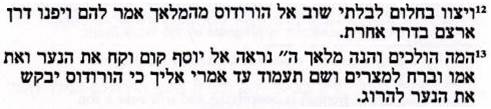
Tree of Life © Time Comments
|
|
1
|
It came to pass when Jesus was born in Bethlehem of Judah in
the days of Herod the king, behold astrologers came
from the East to Jerusalem,
|
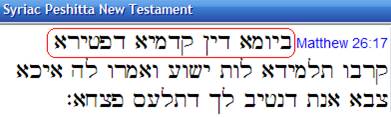
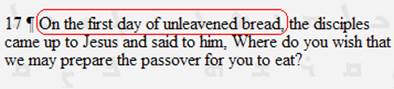
|
|
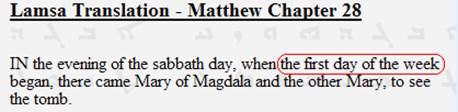
Now when Jesus was born in Bethlehem of Judaea in the days
of Herod the king, behold, there came wise men from
the east to Jerusalem,
|
|
Matthew 2:1
|
George
Howard:
It
came to pass when Jesus was born in Bethlehem of Judah in the days of Herod
the king, behold astrologers came from the East to
Jerusalem,
|
|
2
|
saying: Where is the king of the Jews who has been born. We
have seen his star [Jupiter] rising in the East and
(we) have come with important gifts to worship him..
|
|
|
Saying, Where is he that is born King of the Jews? for we
have seen his star in the east, and are come to worship him.
|
|
Matthew 2:2
|
George
Howard:
saying:
Where is the king of the Jews who has been born. We have seen (his star) in
the East and (we) have come with important gifts to worship him..
|
|
3
|
Then King Herod called the sooth sayers in secret
and asked them what exact time the star had appeared to them.
|
|
|
Then Herod, when he had privily called the wise men,
enquired of them diligently what time the star appeared.
|
|
Matthew 2:7
|
George
Howard:
Then
King Herod called the magicians in secret and asked them well
concerning the time the star (appeared) to them.
|
|
4
|
They
harkened unto the king and went, and behold the star which they saw in the
East was going before them [that
is, the star kept moving from east to west upon the sky… as they had been
doing] until they came
to the place. When they entered Bethlehem it stood [still facing] the opposite [direction,] the
[direction] from which it was born [the East where it rose; thus beginning
its retrograde motion, from west to east, upon the sky].
|
|
|
When they had heard the king, they departed; and, lo, the
star, which they saw in the east, went before them, till it came and
stood over where the young child was.
|
|
Matthew 2:9
|
George
Howard:
They harkened unto the king and
went, and behold the star which they saw in the East was going before them
until they came to the place. When they entered Bethlehem it stopped before the place where the
child was.
|
|
5
|
They harkened unto the king and went, and behold the star which
they saw in the East was going before them [was facing them; that is, it kept pointing (relative to
zenith) in the same direction as the men from the east were traveling] until they came to the place. When they entered Bethlehem it
stood over against the place where the child was.
[AND/OR: When they entered Bethlehem it stood still while
turning its face towards the place of its origin.]
|
|
|
When they had heard the king, they departed; and, lo, the
star, which they saw in the east, went before them, till it came and stood
over where the young child was.
|
|
Matthew 2:9
|
|
|
6
|
When they saw the star they
rejoiced with exceedingly great joy.
|
|
|
When they saw the star, they rejoiced with exceeding great
joy.
|
|
Matthew 2:10
|
|
|
7
|
They came into the house, found
him and his mother Mary, knelt before him, worshipped him, opened their
sacks, and brought to him gifts of gold, frankincense, and myrrh.
|
|
|
And when they were come into the house, they saw the young
child with Mary his mother, and fell down, and worshipped him: and when they
had opened their treasures, they presented unto him gifts; gold, and
frankincense, and myrrh.
|
|
Matthew 2:11
|
|
|
8
|
Then they
were commanded in a dream by the angel who spoke to them not to return to
Herod; so they returned to their land by another route.
|
|
|
being warned of God in a dream that they should not return
to Herod, they departed into their own country another way.
|
|
Matthew 2:12
|
George
Howard:
Then they were commanded in a dream
by the angel who spoke to them not to return to Herod; so they returned to
their land by another route.
|
|
9
|
As they
were going, behold the angel of the Lord appeared unto Joseph (saying:) Arise,
take the boy and his mother, flee to Egypt and stay there until I tell you,
because Herod will seek the boy to kill him.
|
|
|
And when they were departed, behold, the angel of the Lord
appeareth to Joseph in a dream, saying, Arise, and take the young child and
his mother, and flee into Egypt, and be thou there until I bring thee word:
for Herod will seek the young child to destroy him.
|
|
Matthew 2:13
|
George
Howard:
As they were going, behold the
angel of the Lord appeared unto Joseph (saying:) Arise, take the boy and his
mother, flee to Egypt and stay there until I tell you, because Herod will
seek the boy to kill him.
|
|
10
|
In those days came John the Baptist, preaching in the
wilderness of Judaea,
|
|
|
In those days came John the Baptist, preaching in the wilderness
of Judaea,
|
|
Matthew
3:1 TLT
|
|
|
11
|
And saying, Repent ye: for the kingdom of heaven is
what you make of it.
|
|
|
And saying, Repent ye: for the kingdom of heaven is at
hand.
|
|
Matthew
3:2 TLT
|
|
|
12
|
And saying, Repent ye: for the kingdom
of heaven is what you make it be in the here and the now.
|
|
|
And saying, Repent ye: for the kingdom of heaven is at
hand.
|
|
Matt.
3:2 TLT
|
|
|
13
|
And the lessons, that Yeshua had received from John’s
teaching that season, he brought with him to Galilee;
|
|
|
Now when Jesus had heard that John was cast into prison, he
departed into Galilee;
|
|
Matthew
4:12 TLT
|
Cf. Syriac Peshitta
NT!
|
|
14
|
From that time Jesus began to preach, and to say, Repent: for
the kingdom of heaven is what you make of it.
|
|
|
From that time Jesus began to preach, and to say, Repent: for
the kingdom of heaven is at hand.
|
|
Matthew
4:17 TLT
|
|
|
15
|
Our Origin
/ original Father / Creator in verity, clear your title [to me and mine!]
|
Vårt Ursprung / Fader vår / Du som verkligen är
Skaparen, rengör Din titel [till
mig och mitt!]
|
|
After this manner therefore pray ye: Our Father which art in
heaven, Hallowed be thy name.
|
|
Matthew 6:9
|
|
|
16
|
Create
your Kingdom of Delight! Take title to it and let it be shaped [not only] in name, but in action and substance!
|
Skapa ditt underbara Konungarike! Tag titel
till det och låt det formas [inte bara] i ord [eller
tanke,] men i akt och i påtaglighet!
|
|
Thy kingdom come. Thy will be done in earth, as it is in heaven.
|
|
Matthew 6:10
|
|
|
17
|
Teach us our lessons continually [such that
we may come to recognize each our part of the responsibility!]
|
Lär oss våra
lärdomar, kontinuerligt och oavbrutet [på det att vi måtte uppmärksamma vars
och ens vår delaktighet i ansvaret!]
|
|
Give us this day our daily bread.
|
|
Matthew 6:11
|
|
|
18
|
Forgive
us / Give us advance healing, as we give healing to others that are trespassing upon us and ours.
|
Förlåt oss / Giv oss förebyggande läkedom, likasom vi
ger läkedom till andra som överträder oss och
vårat.
|
|
And forgive us our debts, as we forgive our debtors.
|
|
Matthew 6:12
|
|
|
19
|
And let
us not [be forced to] come into knowledge by [our own] experience, but guard [us by means of teaching us how to
accept your advance warning; by means of making your word of truth be our
head] us
from all destructive power and authority. Let it be so! Amen!
|
Och låt oss inte [tvingas] komma till kunskap genom
[våra egna] misstag, men skydda [genom att lära oss ta varning
i förtid; genom att låta sanningens ord vara vårat huvud] oss från
all destruerande makt och myndighet. Låt det så vara! Amen!
|
|
And lead us not into temptation, but deliver us from evil: For thine
is the kingdom, and the power, and the glory, for ever. Amen.
|
|
Matthew 6:13
|
|
|
20
|
And it
came to pass at the
beginning of the hot season that
Jesus passed on from there and entered into their Synagogues.
|
|
|
And when he was departed thence, he went into their
synagogue:
|
και μεταβας
εκειθεν ηλθεν
εις την
συναγωγην
αυτων
|
Matthew
12:9 TLT
|
Cf. Shem Tov’s Hebrew Matthew!
George
Howard:
It came to
pass at the end of the days
that Jesus passed on from there and entered into their Synagogues.
|
|
21
|
It came to pass,
at the beginning of the
summer, that Jesus passed on from there
and entered into their Synagogues.
|
|
|
And when he was departed thence, he went into their
synagogue:
|
|
Matthew
12:9 TLT
|
Cf. above!
|
|
22
|
And it
came to pass at the point of the
beginning of the summer
that Yeshu passed on from there and entered into their Synagogues.
|
|
|
And when he was departed thence, he went into their
synagogue:
|
|
Matthew
12:9 TLT
|
Cf. Syriac
Peshitta New Testament!
|
|
23
|
And he said unto them, What man shall there be among you, that
shall have one sheep, and if it fall into a pit on the Day
of Sabbaths, will he not
lay hold on it, and lift it out?
|
Han svarade dem: "Vem av er skulle inte gripa tag i sitt får och dra upp
det om det faller i en grop, och det också på Sabbaternas Dag ?
|
|
And he said unto them, What man shall there be among you,
that shall have one sheep, and if it fall into a pit on the
sabbath day, will he not
lay hold on it, and lift it out?
|
ο δε
ειπεν αυτοις
τις εσται εξ
υμων ανθρωπος
ος εξει προβατον
εν και εαν
εμπεση τουτο τοις G3588 T-DPN σαββασιν G4521 N-DPN εις
βοθυνον ουχι
κρατησει αυτο
και εγερει
|
Matteus
12:11 TLT
|
Cf. Syriac Peshitta New Testament!
|
|
24
|
…on that very day…
|
|
|
The same day…
|
|
Matt 13:1 TLT
|
|
|
25
|
Then
Jesus called his disciples unto him, and said, I have compassion on the multitude, because they are continuing with me now for two days, and have nothing to eat: and I will not send them away fasting, lest they faint in the way.
|
Then1161 Jesus2424 called4341 his848 disciples3101 unto him, and said,2036 I have compassion4697 on1909 the3588 multitude,3793 because3754 they are continuing with4357 me3427 now2235 for twoH8147 days,G2250 and2532 have2192 nothing5101, 3756 to eat:5315 and2532 I will2309 not3756 send them away630, 846 fasting,3523 lest3379 they faint1590 in1722 the3588 way.3598
|
Then1161 Jesus2424 called4341 his848 disciples3101 unto him, and said,2036 I have compassion4697 on1909 the3588 multitude,3793 because3754 they continue with4357 me3427 now2235 threeG5140 days, G2250 and2532 have2192 nothing5101, 3756 to eat:5315 and2532 I will2309 not3756 send them away630, 846 fasting,3523 lest3379 they faint1590 in1722 the3588 way.3598
|
Then Jesus called his disciples unto him, and
said, I have compassion on the multitude, because they continue with me
now three days, and have nothing to eat: and I will not send them away
fasting, lest they faint in the way.
|
|
Matt 15:32 TLT+
|
NOTICE: Shem Tov’s Hebrew
Matthew says: “two days,” not “three days!”
|
|
26
|
Do you not
know how to discriminate the indicators of the Appointments of Elohim?,”
or
“Can you not
recognize the [precise and specific] indicators of the Feasts of the
Almighty?
|
|
|
Can ye
not discern the signs of the times?
|
|
Matthew 16:3
|
Cf. Luke 4:19 “To preach the acceptable year of the Lord.” “κηρυξαι G2784 V-AAN ενιαυτον G1763 N-ASM κυριου G2962 N-GSM δεκτον G1184 A-ASM ”
|
|
27
|
Show me the seal of the
obligation. And they brought it to him.
|
|
|
Shew me the tribute money. And they brought unto him a
penny.
|
|
Matt 22:19 TLT
|
|
|
28
|
After the Second Day [of
the week] comes Passover…
|
Ye know1492 that3754 after3326 the Second1417 Day2250 begins1096 the feast of the3588 passover,3957 and2532 the3588 Son5207 of man444 is betrayed3860 to be crucified.4717 [Cf. this link!]
[Shem Tov’s
Hebrew Matthew: שאחר
שני ימים
יהיה הפסח ]
|
Ye know1492 that3754 after3326 two1417 days2250 is1096 the feast of the3588 passover,3957 and2532 the3588 Son5207 of man444 is betrayed3860 to be crucified.4717
|
Ye know that after two days is the feast of the passover,
and the Son of man is betrayed to be crucified.
|
|
Matt
26:2 TLT
|
|
|
29
|
And in the foremost [the beginning, the initial] day of the feast of the commandments…
|
|
|
|
τη
δε πρωτη των
αζυμων
προσηλθον οι
μαθηται τω
ιησου λεγοντες
αυτω που
θελεις
ετοιμασωμεν
σοι φαγειν το
πασχα
|
Matthew 26:17 TLT
|
Cf. Shem Tov’s Hebrew Matthew!
|
|
30
|
Based upon
Shem Tov’s Hebrew;
George Howard
English:
Jesus cried in a loud voice
saying, in the holy
language, My God, My God, why have you
forsaken me?
|
Shem Tov
Hebrew:
יש"ו צעק בקול
גדול אומר
בלשון הקודש
אלי אלי למה עזבתני
|
Syriac
Peshitta
Aramaic:
ולאפי
תשע שעין קעא
ישוע בקלא
רמא ואמר איל
איל למנא שבקתני:
|
Du Tillet
Hebrew:
ובשעה
תשיעית קרא
ישו בקול
גדול ויאמר
אלי אלי למה שכחתני
|
Textus Receptus
Greek:
περι
δε την εννατην ωραν
ανεβοησεν ο ιησους
φωνη μεγαλη λεγων
ηλι ηλι λαμα σαβαχθανι τουτ
εστιν θεε μου θεε
μου ινατι με εγκατελιπες
|
Matthew
27:46 GH
|
Notice
the obvious
sequence of translation, that is, as based upon the Aramaic word “שבקתני!:”
1-Hebrew
(“the holy language,” – Isn’t it quite obvious why the quoted words are
omitted by the Aramaic translator?!!!)
2-Aramaic,
3-Greek,
4-English,
and…
1-An original
Hebrew MS out of which Shem Tov’s Hebrew Matthew is a transcript,
2-An
Aramaic MS of which the Syriac Peshitta is a transcript, and
3-A reverse
translation into Hebrew of which Du Tillet’s Matthew is a transcript.
|
|
31
|
Shem Tov’s Hebrew based:
And in the foremost day
after [the beginning of] the Seventh [Day of the Feast of Unleavened Bread] at sunset [the
time when the shadows are rising upon the hills…]
|
I
Shem Tov
Hebrew:
וביום הראשון מהשבוע בהשכמה...
|
II
Syriac Peshitta
Aramaic:
ברמשא דין בשבתא
דנגה חד בשבא...
|
III
Du Tillet
Hebrew:
ובערב השבת שיאיר
באחד השבת...
|
IV
Textus Receptus
Greek:
οψεG3796 ADV δεG1161 CONJ σαββατωνG4521 N-GPN τηG3588 T-DSF επιφωσκουσηG2020 V-PAP-DSF ειςG1519 PREP μιανG1520 A-ASF σαββατων…G4521 N-GPN
|
Matthew
28:1 TLT
|
Notice how
the translators have been able to
maintain the original meaning throughout each and all of these four (I-IV)
translations, while yet changing considerably the order of words, most
especially in the Hebrew to Aramaic translation! Cf. also Matthew 27:46!
The most likely reason for these changes are no doubt
the translators’ desire to clarify Hebrew concepts of time that are not
immediately familiar to other cultures, languages, and people...
|
|
32
|
|
Shem
Tov’s
Hebrew
based TLT:
And in the foremost day
after [the beginning of] the Seventh [Day of the Feast of Unleavened Bread] at sunset [the
time when the shadows are rising upon the hills…]
|
Syriac
Peshitta
Aramaic based TLT - A:
And in the evening at the [time of] Sabbath candle
lightening of the foremost of the seven [days
of the Feast of Unleavened Bread…]
|
Du
Tillet
Hebrew
based TLT - A:
And in the eve of
the Sabbath, as the [Sabbath]
candles were lit, in the foremost Sabbath,…
|
Textus Receptus
Greek based TLT:
And one of the Sabbath evenings,
that is, at the [time of] twilight [when
Sabbath’s candles are being lit and when the lights are rising into the sky
above the growing shadows upon the hills] of the foremost of Sabbaths [i.e. at the beginning of the Seventh Day of the Feast of Unleavened Bread…]
|
Ditto
|
Notice
also how the reverse translation, from the Aramaic of the Syriac Peshitta MS
to the Hebrew of the Du Tillet MS, is much more of a literal word for word translation!
Likewise the Aramaic to Greek translation…
Notice
also that, in contradistinction to Du Tillet’s text, I do not find it
reasonable to perceive Shem Tov’s Matthew 28:1 as a reverse translation from
either the Aramaic or from the Greek!
Cf. Syriac Peshitta and the Lamsa translation!
|
|
33
|
|
|
Syriac Peshitta
Aramaic based TLT - B:
And in
the evening at the [time of] Sabbath
twilight [at the beginning] of
the foremost of the seven [days of the Feast of Unleavened Bread…]
|
Du Tillet
Hebrew based TLT - B:
And in
the evening of the Sabbath, as the light was rising [into the sky above the shadows
growing upon the hillsides,] in
the foremost Sabbath…
|
KJV – based upon the Greek TR:
In the end(3796) of the sabbath,4521 as it began to dawn2020 toward1519 the first3391 day of the week,4521…
|
Ditto
|
Also
at these links:
1)
Crucifixion
week,
2)
Greek Word Study “mia ton sabbatwn” a, b, c,
3)
List of week
days etc. named in NT,
4)
Hebrew Word Study “yom rishon,”
5)
Hebrew Word Study “שכמה,” i.e. “twilight” etc..
6)
An analysis of the Greek Textus Receptus of Matthew
28:1:
a,
b, c,
d,
e…
|
|
34
|
And it came to pass in that same hot season, that Jesus came from Nazareth of Galilee, and was
baptized of John in Jordan.
|
|
|
And it came to pass in those days, that Jesus came from Nazareth of Galilee, and was baptized of John
in Jordan.
|
και
εγενετο εν
εκειναις ταις
ημεραις ηλθεν
ιησους απο
ναζαρεθ της
γαλιλαιας και
εβαπτισθη υπο
ιωαννου εις
τον ιορδανην
|
Mark 1:9
TLT
|
Cf. Syriac Peshitta!
|
|
35
|
And it came to pass in that same spring, that
Yeshua came from Nazareth of Galilee, and was baptized of John in Jordan.
|
|
|
|
|
Mark
1:9 TLT
|
Also at this link.
|
|
36
|
And it came to pass that in those same
hot days came Yeshua from Nazareth of Galilee and was baptized in
Jordan by John
|
|
|
|
|
Mark
1:9 TLT
|
|
|
37
|
After being
delivered by John, Jesus came into Galilee, preaching the gospel of
the kingdom of God,
|
|
|
Now after that John was put in prison, Jesus
came into Galilee, preaching the gospel of the kingdom of God,
|
|
Mark 1:14
TLT
|
|
|
38
|
And again
Yeshua entered into Capurnakhum just before
the summer; and when
they heard that he was home…
|
|
|
And again
he entered into Capernaum after
some days;
and it was noised that he was in the house.
|
|
Mark
2:1 TLT
|
Cf. Syriac Peshitta!
|
|
39
|
again he
entered into Capernaum, during
the hot days of summer…
|
|
|
again he
entered into Capernaum, after
some days…
|
και
παλιν εισηλθεν
εις
καπερναουμ δι
ημερων και
ηκουσθη οτι
εις οικον
εστιν
|
Mark
2:1 TLT
|
Cf. Syriac Peshitta!
|
|
40
|
…on that very day, evening
having come…
|
|
|
|
|
Mark 4:(1,) 35 TLT
|
|
|
41
|
And
he said unto them, This is my word of the new covenant, which
is being bestowed over many.
|
|
|
And
he said unto them, This is my blood of the new testament, which is shed for
many.
|
|
Mark 14:24
TLT
|
|
|
42
|
And
just prior to the most important of the Shabbats [i.e. just
before the beginning of the Seventh Day of the Feast of Unleavened Bread,] they came unto
the sepulcher at the setting of the sun.
|
And2532 just3029 prior to4404 the3588 most important3391 of the Shabbats [i.e. just before the beginning of the Seventh Day of the Feast
of Unleavened Bread,]4521
they came2064 unto1909 the3588 sepulcher3419 at the setting393 of the3588 sun.2246
|
And2532 very3029 early in the
morning4404 the3588 first3391 day of the3588 week,4521 they came2064 unto1909 the3588 sepulcher3419 at the rising393 of the3588 sun.2246
|
And very early in the morning the first day of the
week, they came unto the sepulchre at the rising of
the sun.
|
|
Mar 16:2 TLT+
|
Also at this link…
|
|
43
|
And at the very beginning of the Seventh Day of the Feast
of Unleavened Bread, they came unto the sepulchre at the setting of
the sun.
|
|
|
|
|
Mark 16:2 TLT
|
|
|
44
|
Now when Jesus was
risen at the very beginning of the Seventh Day of the Feast of
Unleavened Bread, he appeared first to Mary Magdalene, out of whom
he had cast seven devils.
|
|
|
Now when Jesus was
risen early the first day of the week, he
appeared first to Mary Magdalene, out of whom he had cast seven devils.
|
|
Mark 16:9 TLT
|
|
|
45
|
Now
when Jesus was risen in the beginning [i.e. at
sunset] of the foremost Shabbat [i.e. the Seventh Day of the Feast of
Unleavened Bread…]
|
|
|
Now when Jesus was
risen early the first day of the week, he appeared
first to Mary Magdalene, out of whom he had cast seven devils.
|
|
Mark
16:9 TLT
|
Also at this link…
|
|
46
|
But the
angel said unto him, Fear not, Zacharias: for thy prayer is heard; and thy
wife Elisabeth shall deliver unto thee a son, and thou shalt call
his name John.
|
|
But1161 the3588 angel32 said2036 unto4314 him,846 Fear5399 not,3361 Zacharias:2197 for1360 thy4675 prayer1162 is heard;1522 and2532 thy4675 wife1135 Elisabeth1665 shall bear1080 thee4671 a son,5207 and2532 thou shalt
call2564
his846
name3686
John.2491
|
|
|
Luke 1:13 TLT
|
Also at this link…
|
|
47
|
And it came to pass, that, in that manner were
concluded the days of his ministration and he
departed to his own house.
|
AndG2532 it came to pass,G1096 that, in that
mannerG5613 were concludedG4130 theG3588 daysG2250 of hisG846
ministrationG3009 and he
departedG565 toG1519 his
ownG848 house.G3624
|
AndG2532 it came to pass,G1096 that, as soon asG5613 theG3588 daysG2250 of hisG846
ministrationG3009 were accomplished,G4130 he
departedG565 toG1519 his
ownG848 house.G3624
|
And it came to pass, that, as soon as the
days of his ministration were accomplished, he
departed to his own house.
|
και
εγενετο ως επλησθησαν αι ημεραι της
λειτουργιας
αυτου απηλθεν
εις τον οικον
αυτου
|
Luke 1:23 TLT
|
Also at this link…
|
|
48
|
And about those days his wife Elisabeth pulled [herself] together, and hid herself in
the fifth month,
saying…
|
|
And1161 after3326 those5025 days2250 his846 wife1135 Elisabeth1665 conceived,4815
(or 4900) and2532 hid4032 herself1438 five4002 months,3376 saying,3004…
|
And after those days his wife Elisabeth conceived, and
hid herself five months, saying,
|
|
Luke 1:24 TLT
|
Also at this link…
|
|
49
|
And Mary arose in those summer days, and
went into the hill country with haste, into a city of Juda;
|
|
|
And Mary arose in those days, and
went into the hill country with haste, into a city of Juda;
|
αναστασα
δε μαριαμ εν ταις ημεραις
ταυταις επορευθη εις
την ορεινην
μετα σπουδης
εις πολιν
ιουδα
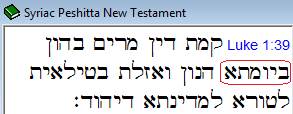
|
Luke
1:39 TLT
|
Cf. Syriac Peshitta!
|
|
50
|
And
there were in the same country shepherds… by night.
|
|
|
And there were in the same country shepherds abiding in the
field, keeping watch over their flock by night.
|
|
Luke
2:8 TLT
|
|
|
51
|
And
behold,
there was a Messenger of the Moon sign unto them; and the parturition
fears of Mary’s labor contractions were upon their minds; and they worried a
great deal.
|
|
|
And, lo, the angel of the Lord came upon them,
and the glory of the Lord shone round about them: and they were sore
afraid.
|
|
Luke
2:9 TLT
|
|
|
52
|
And behold,
there was a Messenger of the Gods [a reference to Mercury and to the Sun and the Moon?] sign unto them; and the parturition fears of Mary’s labor contractions were upon their
minds; and they worried a great deal.
|
|
|
And, lo, the angel of the Lord came upon them,
and the glory of the Lord shone round about them: and they were sore
afraid.
|
|
Luke
2:9 TLT
|
|
|
53
|
And
the angel said unto them: Fear not…
|
|
|
And the angel said unto them, Fear not: for, behold, I
bring you good tidings of great joy, which shall be to all people.
|
|
Luke
2:10 TLT
|
|
|
54
|
For
unto you is delivered this day [Day Three,
Sivan 1 [Monday evening May 28,] 15 BCE…]
|
|
|
For unto you is born this
day in the city of David a Saviour, which is Christ the Lord.
|
|
Luke
2:11 TLT
|
|
|
55
|
And
this is for you [that is, Mercury’s appearance on the sky is for you:] You will find that it is a sign [of] an
infant who is
wrapped in swaddling clothes and lying in a manger
|
|
|
And this shall be a sign unto
you; Ye shall find the babe wrapped in swaddling clothes, lying
in a manger.
|
|
Luke
2:12 TLT
|
|
|
56
|
And this is for you [that is, Mercury’s
appearance on the sky is for you:] You
will find that it is a sign [of] an infant who is wrapped in swaddling clothes and
lying in a manger [a reference
to Jupiter, the infant King, within the Crab constellation?]
|
|
|
And this shall be a sign unto
you; Ye shall find the babe wrapped in swaddling clothes, lying
in a manger.
|
|
Luke
2:12 TLT
|
|
|
57
|
And it came to pass, that
after the first three days of the week [Tuesday night] they found him in the temple, sitting in the midst
of the doctors, both hearing them, and asking them questions. [Either Aviv 28 or Aviv 27, 3
BCE; Tuesday night of either April 15 or May 13, 3 BCE.]
|
And2532 it came to pass,1096 that after3326 the
first three5140 days of the week [Tuesday night]2250 they found2147 him846 in1722 the3588 temple,2411 sitting2516 in1722 the midst3319 of the3588 doctors,1320 both2532 hearing191 them,846 and2532 asking them
questions.1905, 846 [Either
Aviv 28 or Aviv 27, 3 BCE; Tuesday night of either April 15 or May 13, 3
BCE.]
|
And2532 it came to pass,1096 that after3326 three5140 days2250 they found2147 him846 in1722 the3588 temple,2411 sitting2516 in1722 the midst3319 of the3588 doctors,1320 both2532 hearing191 them,846 and2532 asking them
questions.1905, 846 [cf. this
link!]
|
And it came to pass, that after three days they found
him in the temple, sitting in the midst of the doctors, both hearing them,
and asking them questions.
|
|
Luke
2:46 TLT
|
Also at this link
and this link.
|
|
58
|
And he came to Nazareth, where he had been brought up: and,
as his custom was, he went into the synagogue on the Day of
Sabbaths
[Feast of Weeks; Pentecost,] and stood up for to read. [Sivan 9, 15 CE [Saturday June 15, 15 CE] cf. this
link!]
|
And2532 he came2064 to1519 Nazareth,3478 where3757 he had been2258 brought up:5142 and,2532 as2596 his846 custom1486 was, he went1525 into1519 the3588 synagogue4864 on1722 the3588 Day2250 of
the3588
Sabbaths4521, and2532 stood up450 for to read.314
[Sivan 9, 15 CE [Saturday June 15, 15 CE] cf. this
link!]
|
And2532 he came2064 to1519 Nazareth,3478 where3757 he had been2258 brought up:5142 and,2532 as2596 his846 custom1486 was, he went1525 into1519 the3588 synagogue4864 on1722 the3588 sabbath4521 day,2250 and2532 stood up450 for to read.314
|
|
εν1722 PREP τη3588 T-DSF ημερα2250 N-DSF των3588 T-GPN σαββατων4521 N-GPN
|
Luke 4:16 TLT+
|
Also at this link,
this link,
this link, and this link…
Cf. Syriac Peshitta!
|
|
59
|
Så kom han till Nasaret, där
han hade vuxit upp. På Sabbaternas
Dag gick han till synagogan som han brukade. Han reste sig
för att läsa ur Skriften. [Sivan
9, 15 CE [Lördagen den 15 juni, 15 CE] Jmf. denna länk!]
|
|
|
SFB-98: Så kom han till
Nasaret, där han hade vuxit upp. På sabbaten
gick han till synagogan som han
brukade. Han reste sig för att läsa ur Skriften
|
και
ηλθεν εις την ναζαρεθ
ου ην τεθραμμενος
και εισηλθεν κατα
το ειωθος αυτω εν
τη G3588 T-DSF ημερα G2250 N-DSF των G3588 T-GPN σαββατων G4521 N-GPN εις την συναγωγην
και ανεστη αναγνωναι
|
Lukas
4:16 TLT
|
Jfr den Syrianska
Peshittan!
|
|
60
|
And it came to pass that on a most important day at the
beginning of summer while Yeshua was teaching…
|
|
|
And it came to pass on a certain day, as
he was teaching…
|
εν μια
των ημερων
|
Luke
5:17 TLT
|
Cf. Syriac Peshitta!
|
|
61
|
And it came to pass on the initial Sabbath of the second
annual cycle of 24 weeks of priestly temple services [that is, after the
Waving of the Sheaf on the morrow of the 7th Day Sabbath, Aviv
21 (Sat April 18,) 16 CE,] that
he went through the corn fields; and his disciples plucked the ears of corn,
and did eat…
|
|
|
And it came to pass on the second Sabbath after the first, that he went through the corn fields; and his
disciples plucked the ears of corn, and did eat…
|
|
Luke 6:1 TLT
|
|
|
62
|
And it came to pass also on another sabbath, that he
entered into the synagogue and taught: and there was a man whose right hand
was withered.
|
And1161
it came to pass1096
also2532
on1722
another2087
sabbath,4521
that he846
entered1525
into1519
the3588
synagogue4864
and2532
taught:1321
and2532
there1563
was2258
a man444 (2532)
whose846
right1188
hand5495
was2258
withered.3584
|
And1161
it came to pass1096
also2532
on1722
another2087
sabbath,4521
that he846
entered1525
into1519
the3588
synagogue4864
and2532
taught:1321
and2532
there1563
was2258
a man444 (2532)
whose846
right1188
hand5495
was2258
withered.3584
|
And it came to pass also on another sabbath, that he
entered into the synagogue and taught: and there was a man whose right hand
was withered.
|
|
Luke
6:6 TLT+
|
From the context, while in the process of building my
four gospel synopsis, I discovered that this event happened, most likely, on Aviv 28 or else Zif 6, 16 CE, (Seventh Day Sabbath #2 or #3 [of 8]
of Omer [beginning at sunset Fri Apr 24,
or May 1,] 16 CE. Cf. this
link!
|
|
63
|
And
it came to pass that in [number] one of the [reckoning of
the] days [of the month] he went into a ship with his
disciples: and he said unto them, Let us go over unto the
other side of the lake. And they launched forth.
|
|
|
Now it came to pass on a certain day,
that he went into a ship with his disciples: and he said unto them, Let us
go over unto the other side of the lake. And they launched
forth.
|
και εγενετο
εν μια των
ημερων και αυτος
ενεβη εις
πλοιον και οι
μαθηται αυτου
και ειπεν προς
αυτους
διελθωμεν εις
το περαν της λιμνης
και ανηχθησαν
|
Luke
8:22 TLT
|
Also at this link,
this link, and this link.
Perhaps the date stamp of this passage could be
understood in terms of the First Day of the week, but I believe the more
common designator for that day is ‘protae’ not ‘mia.’ Nevertheless, the
placement of this event within my four gospel synopsis seems to ascertain the
date of this event to Elul
1, 16 CE [beginning at sunset Sat Aug 22, 16 CE.]
|
|
64
|
|
|
|
And he was teaching in one of
the synagogues on the sabbath.
|
ην δε
διδασκων εν
μια των
συναγωγων εν τοις
σαββασιν
|
Luke
13:10 TLT
|
Cf. Syriac Peshitta!
|
|
65
|
And the ruler of the synagogue answered with indignation,
because that Jesus had healed on the sabbath day, and
said unto the people, There are six days in which men ought to work: in them
therefore come and be healed, and not on the Day of Sabbaths.
|
|
|
And the ruler of the synagogue answered with indignation,
because that Jesus had healed on the sabbath day, and said unto the people,
There are six days in which men ought to work: in them therefore come and be
healed, and not on the sabbath day.
|
αποκριθεις
δε ο
αρχισυναγωγος
αγανακτων οτι
τω σαββατω
εθεραπευσεν ο
ιησους ελεγεν
τω οχλω εξ ημεραι
εισιν εν αις
δει
εργαζεσθαι εν
ταυταις ουν ερχομενοι
θεραπευεσθε
και μητη G3588 T-DSF ημερα G2250 N-DSF του G3588 T-GSN σαββατου G4521 N-GSN
|
Luke
13:14 TLT
|
Cf. Syriac Peshitta!
|
|
66
|
Men synagogföreståndaren blev
upprörd över att Jesus botade på sabbaten, och han sade till folket: "Sex dagar skall man
arbeta. Kom därför och bli botade på dem och inte på Sabbaternas Dag."
|
|
|
Men
synagogföreståndaren blev upprörd över att Jesus botade på sabbaten, och han
sade till folket: "Sex dagar skall man arbeta. Kom därför och bli botade
på dem och inte på sabbaten."
|
|
Lukas
13:14 TLT
|
Jfr Syrianska Peshittan!
|
|
67
|
|
|
|
The Lord then answered him, and said, Thou hypocrite, doth
not each one of you on the sabbath loose his ox or his ass from the
stall, and lead him away to
watering?
|
|
Luke
13:15 TLT
|
|
|
68
|
|
|
|
Då svarade Herren honom:
"Ni hycklare! Löser inte varenda en av er på sabbaten sin oxe eller åsna
från krubban och leder bort och vattnar den?
|
|
Lukas
13:15 TLT
|
|
|
69
|
And ought not this woman, being a daughter of Abraham, whom Satan
hath bound, lo, these eighteen years, be loosed from this bond on the Day of
Sabbaths?
|
|
|
And ought not this woman, being a daughter of Abraham, whom Satan
hath bound, lo, these eighteen years, be loosed from this bond on the sabbath
day?
|
ταυτην
δε θυγατερα
αβρααμ ουσαν
ην εδησεν ο
σατανας ιδου
δεκα και οκτω
ετη ουκ εδει
λυθηναι απο
του δεσμου
τουτου τη G3588 T-DSF ημερα G2250 N-DSF του G3588 T-GSN σαββατου G4521 N-GSN
|
Luke
13:16 TLT
|
Cf. Syriac Peshitta!
|
|
70
|
Men denna kvinna, en Abrahams
dotter som Satan har hållit bunden i arton år, borde hon inte få bli löst
från sin boja på Sabbaternas Dag?
|
|
|
Men denna
kvinna, en Abrahams dotter som Satan har hållit bunden i arton år, borde hon
inte få bli löst från sin boja på sabbaten?"
|
|
Lukas
13:16 TLT
|
Jfr Syrianska Peshittan!
|
|
71
|
And it came to pass, as he went into the house of one of
the chief Pharisees to eat bread on the Day of Sabbaths, that
they watched him.
|
|
|
And it came to pass, as he went into the house of one of the
chief Pharisees to eat bread on the sabbath day, that
they watched him.
|
και
εγενετο εν τω
ελθειν αυτον
εις οικον
τινος των
αρχοντων των
φαρισαιων σαββατω G4521 N-DSN φαγειν αρτον
και αυτοι ησαν
παρατηρουμενοι
αυτον
|
Luke
14:1 TLT
|
Cf. Syriac Peshitta!
|
|
72
|
När Jesus på Sabbaternas Dag gick in för att äta hos en av de ledande fariseerna,
vaktade de på honom.
|
|
|
Lukas 14:1 SFB-98:
När Jesus en sabbat gick in
för att äta hos en av de ledande fariseerna, vaktade de på honom.
|
και
εγενετο εν τω
ελθειν αυτον
εις οικον
τινος των
αρχοντων των
φαρισαιων σαββατω G4521 N-DSN φαγειν αρτον
και αυτοι ησαν
παρατηρουμενοι
αυτον
|
Lukas
14:1 TLT
|
Jfr. Syrianska Peshittan!
|
|
73
|
And answered them, saying, Which of you shall have an ass
or an ox fallen into a pit, and will not straightway pull him out on the Day
of Sabbaths?
|
|
|
And answered them, saying, Which of you shall have an ass
or an ox fallen into a pit, and will not straightway pull him out on the
sabbath day?
|
και
αποκριθεις
προς αυτους
ειπεν τινος
υμων ονος η
βους εις φρεαρ
εμπεσειται
και ουκ ευθεως
ανασπασει
αυτον εν τη G3588 T-DSF ημερα G2250 N-DSF του G3588 T-GSN σαββατου G4521 N-GSN
|
Luke
14:5 TLT
|
Cf. Syriac Peshitta!
|
|
74
|
Och han sade till dem: "Om någon av er har en son eller så bara en oxe som
faller i en brunn, skulle han då inte genast dra upp honom även om det är Sabbaternas Dag?"
|
|
|
Lukas 14:5 SFB-98:
Och han sade till dem: "Om någon av er har en son eller så bara en oxe som
faller i en brunn, skulle han då inte genast dra upp honom även om det vore sabbat?"
|
και
αποκριθεις
προς αυτους
ειπεν τινος
υμων ονος η
βους εις φρεαρ
εμπεσειται
και ουκ ευθεως
ανασπασει
αυτον εν τη G3588 T-DSF ημερα G2250 N-DSF του G3588 T-GSN σαββατου G4521 N-GSN
|
Lukas
14:5 TLT
|
Jfr. Syrianska Peshittan!
|
|
75
|
Now upon the foremost of the Sabbaths [i.e. the Seventh Day of the Feast of Unleavened Bread,] at
the very beginning of the [Scripture] day [sunset,] they came unto the sepulcher, bringing the spices
which they had prepared, and certain others with them.
|
Now1161 upon the3588 number
one3391 of the3588 Sabbaths [i.e. the Seventh Day of the
Feast of Unleavened Bread,]4521 at the very beginning of the [Scripture]
day [sunset,]901,
3722 they came2064 unto1909 the3588 sepulcher,3418 bringing5342 the spices759 which3739 they had prepared,2090 and2532 certain5100 others with4862 them.846
|
NowG1161
upon theG3588 firstG3391
day of theG3588 week,G4521
very early in the morning,G901
G3722 they cameG2064
untoG1909 theG3588 sepulchre,G3418 bringingG5342 the spicesG759 whichG3739 they had prepared,G2090
andG2532 certainG5100 others withG4862 them.G846
|
Now upon the first day of the week, very early in the morning, they came unto the sepulchre, bringing the spices
which they had prepared, and certain others with them.
|
τη G3588 T-DSF
δεG1161 CONJ
μια G1520 A-DSF
των G3588 T-GPN
σαββατωνG4521 N-GPN ορθρου G3722 N-GSM βαθεος G901 A-GSM ηλθον επι το μνημα φερουσαι α ητοιμασαν αρωματα και τινες συν αυταις
|
Luke 24:1 TLT+
|
|
|
76
|
And we
trusted that it had been he which should have redeemed Israel: But quite the
opposite happened. And
notice, to top all of that off, this is already (the first
portion of) the Third Day of the week after which
time these things came to pass [i.e.
“the things,” the events, of the prior seven day week.]
|
And1161 we2249 trusted1679 that3754 it had been2076 he846 which should3195 have redeemed3084 Israel:2474 But quite the
opposite happened.235 And notice,1065 to top all of
that off,3956, 4862 this is5125 (3778) already (the first
portion of)71, 4594 the Third5154 Day of
the week2250 after575 which time3739 these things5023
(3778) came to pass1096 [i.e.
“the things,” the events, of the prior seven day week.]
|
But1161 we2249 trusted1679 that3754 it had been2076 he846 which should3195 have redeemed3084 Israel:2474 and1065, 235 beside4862 all3956 this,5125 today4594 is71 the(5026) third5154 day2250 since575, 3739 these
things5023 were
done.1096
|
But we trusted that it had been he which should have redeemed
Israel: and beside all this, to day is the third day since these things
were done.
|
ημεις1473 P-1NP δε1161 CONJ ηλπιζομεν1679 V-IAI-1P οτι3754 CONJ αυτος846 P-NSM εστιν1510 V-PAI-3S ο3588 T-NSM μελλων3195 V-PAP-NSM λυτρουσθαι3084 V-PMN τον3588 T-ASM ισραηλ2474 N-PRI αλλα235 CONJ γε1065 PRT συν4862 PREP πασιν3956 A-DPN τουτοις3778 D-DPN τριτην5154 A-ASF ταυτην3778 D-ASF ημεραν2250 N-ASF αγει71 V-PAI-3S σημερον4594 ADV αφ575 PREP ου3739 R-GSM ταυτα3778 D-NPN εγενετο1096 V-2ADI-3S
|
Luke 24:21 TLT+
Dated…
|
Cf. this link,
this link,
this link,
and this link…
|
|
77
|
And said unto
them, Thus it is written, and thus it behoved Christ to suffer, and to
rise from the dead the Third Day [of the week:]
|
|
|
And said unto them, Thus it is written, and thus it
behoved Christ to suffer, and to rise from the dead the third day:
|
και
ειπεν αυτοις
οτι ουτως
γεγραπται και
ουτως εδει
παθειν τον
χριστον και
αναστηναι εκ
νεκρων τη τριτη
ημερα
|
Luke
24:46 TLT
|
|
|
78
|
And this is the
record of John, when the Jews sent priests and Levites from Jerusalem to ask him [on the Fifth Day, Zif 29, 15 CE, the
last day before the New Moon (beginning at sunset June 5, 15 CE,] Who art thou?
|
|
|
And this is the record of John, when the Jews sent priests
and Levites from Jerusalem to ask him, Who art thou?
|
|
John 1:19 TLT
|
Also at this link.
|
|
79
|
And they which were
sent were of the Pharisees.
|
|
|
And they which were sent were of the Pharisees.
|
|
John
1:24 TLT
|
Also at this link.
|
|
80
|
These things
were done in Bethabara beyond Jordan, where John was baptizing.
|
|
|
These things were done in Bethabara beyond Jordan, where
John was baptizing.
|
|
John
1:28 TLT
|
Also at this link.
|
|
81
|
The next day [on the morning of the Sixth Day,
Sivan 1 (beginning Thu June 6,) 15 CE,] John seeth Jesus coming unto him, and saith, Behold the Lamb of God,
which taketh away the sin of the world.
|
|
|
The next day John seeth Jesus coming unto him, and saith,
Behold the Lamb of God, which taketh away the sin of the world.
|
|
John
1:29 TLT
|
Also at this link.
|
|
82
|
This is he of whom I
said, After me cometh a man which is preferred before me:
for he was before me.
|
|
|
This is he of whom I said, After me cometh a man which is
preferred before me: for he was before me.
|
|
John
1:30 TLT
|
Also at this link.
|
|
83
|
And John bare record, saying, I saw the Spirit descending from heaven like a dove, and it abode upon him.
|
|
|
And John bare record, saying, I saw the Spirit descending
from heaven like a dove, and it abode upon him.
|
|
John
1:32 TLT
|
Also at this link.
|
|
84
|
And I saw, and bare
record that this is the Son of
God.
|
|
|
And I saw, and bare record that this is the Son of God.
|
|
John
1:34 TLT
|
Also at this link.
|
|
85
|
Again the next day after [on the morning of the Seventh Day Sabbath, Sivan 2 (beginning
Fri June 7,) 15 CE,] John [the Baptist] stood, and two of his disciples;
|
|
|
Again the next day after John stood, and two of his
disciples;
|
|
John
1:35 TLT
|
Also at this link.
|
|
86
|
And the two disciples
[of John the Baptist] heard him speak, and they followed Jesus.
|
|
|
And the two disciples heard him speak, and they followed
Jesus.
|
|
John
1:37 TLT
|
Also at this link.
|
|
87
|
He saith unto them, Come
and see. They came and saw where he dwelt, and abode with him that day: for it was about the tenth hour.
|
|
|
He saith unto them, Come and see. They
came and saw where he dwelt, and abode with him that day: for it was about
the tenth hour.
|
|
John 1:39
TLT
|
Also at this link.
|
|
88
|
One of the two which
heard John speak, and followed him, was Andrew, Simon Peter's brother.
|
|
|
One of the two which heard John speak, and
followed him, was Andrew, Simon Peter's brother.
|
|
John
1:40 TLT
|
Also at this link.
|
|
89
|
He first findeth his
own brother Simon, and saith unto him, We have found the Messias, which
is, being interpreted, the Christ.
|
|
|
He first findeth his own brother Simon, and saith unto him,
We have found the Messias, which is, being interpreted, the Christ.
|
|
John
1:41 TLT
|
Also at this link.
|
|
90
|
And he brought him to
Jesus. And when Jesus beheld
him, he said, Thou art Simon the son of Jona: thou shalt be called
Cephas, which is by interpretation, A stone.
|
|
|
And he brought him to Jesus. And when Jesus beheld him, he
said, Thou art Simon the son of Jona: thou shalt be called Cephas, which
is by interpretation, A stone.
|
|
John
1:42 TLT
|
Also at this link.
|
|
91
|
The day
following [on
the morning of the First Day, Sivan 3 (beginning Sat June 8,) 15 CE,] Jesus would go forth into Galilee, and findeth Philip, and saith unto him, Follow me.
|
|
|
The day following Jesus would go forth into Galilee, and
findeth Philip, and saith unto him, Follow me.
|
|
John
1:43 TLT
|
Also at this link.
|
|
92
|
Philip findeth
Nathanael, and saith unto him, We have found him, of whom
Moses in the law, and the prophets, did write, Jesus of Nazareth, the son of
Joseph.
|
|
|
Philip findeth Nathanael, and saith unto him, We have found
him, of whom Moses in the law, and the prophets, did write, Jesus of
Nazareth, the son of Joseph.
|
|
John
1:45 TLT
|
Also at this link.
|
|
93
|
So when
the Samaritans were come unto him, they besought him that he would tarry with
them: and he abode there Day
Two.
|
|
|
So when
the Samaritans were come unto him, they besought him that he would tarry with
them: and he abode there two
days.
|
ως ουν
ηλθον προς
αυτον οι
σαμαρειται
ηρωτων αυτον
μειναι παρ
αυτοις και
εμεινεν εκει
δυοG1417 A-NUI ημεραςG2250 N-APF
|
John 4:40
TLT
|
Cf. Syriac Peshitta!
|
|
94
|
If a man on the Day of Sabbaths receive
circumcision, that the law of Moses should not be broken; are ye angry at me,
because I have made a man every whit whole on the Day of
Sabbaths?
|
|
|
If a man on the sabbath day receive circumcision, that the law of
Moses should not be broken; are ye angry at me, because I have made a man
every whit whole on the sabbath day?
|
ει
περιτομην
λαμβανει
ανθρωπος εν σαββατω G4521 N-DSN ινα μη
λυθη ο νομος
μωσεως εμοι
χολατε οτι
ολον ανθρωπον
υγιη εποιησα
εν σαββατωG4521 N-DSN
|
John
7:23 TLT
|
Cf. Syriac Peshitta!
|
|
95
|
Om någon tar emot omskärelsen på Sabbaternas Dag för att Mose lag
inte skall upphävas, hur kan ni då vara förbittrade på mig, för att jag
gjorde hela människan frisk på Sabbaternas Dag?
|
|
|
Om någon tar emot omskärelsen på sabbaten för att Mose lag inte skall upphävas, hur kan ni då
vara förbittrade på mig, för att jag gjorde hela människan frisk på en sabbat?
|
ει
περιτομην
λαμβανει
ανθρωπος εν σαββατω G4521 N-DSN ινα μη
λυθη ο νομος
μωσεως εμοι
χολατε οτι
ολον ανθρωπον
υγιη εποιησα
εν σαββατωG4521 N-DSN
|
Johannes
7:23 TLT
|
Jfr. Syrianska Peshittan!
|
|
96
|
And in the New Year’s Day [of the Jews’ calendar year; the Eighth Day of
Inclosures; Shemini Atzeret] which
is after the Feast [of Tabernacles,]
Jesus stood and cried, saying, If any
man thirst, let him come unto me, and drink.
|
|
|
In the last day, that great day
of the feast, Jesus stood and cried,
saying, If any man thirst, let him come unto
me, and drink.
|
|
John
7:37 TLT
|
Cf. Syriac Peshitta!
Also at this link.
|
|
97
|
|
|
|
|
|
|
|
|
98
|
|
|
|
|
|
|
|
|
99
|
|
|
|
|
|
|
|
|
100
|
|
|
|
|
|
|
|
|
101
|
|
|
|
|
|
|
|
|
102
|
|
|
|
|
|
|
|
|
103
|
|
|
|
|
|
|
|
|
104
|
|
|
|
|
|
|
|
|
105
|
|
|
|
|
|
|
|
|
106
|
|
|
|
|
|
|
|
|
107
|
|
|
|
|
|
|
|
|
108
|
|
|
|
|
|
|
|
|
109
|
|
|
|
|
|
|
|
|
110
|
|
|
|
|
|
|
|
|
111
|
|
|
|
|
|
|
|
|
112
|
|
|
|
|
|
|
|
|
113
|
|
|
|
|
|
|
|
|
114
|
|
|
|
|
|
|
|
|
115
|
|
|
|
|
|
|
|
|
116
|
|
|
|
|
|
|
|
|
117
|
|
|
|
|
|
|
|
|
118
|
|
|
|
|
|
|
|
|
119
|
|
|
|
|
|
|
|
|
120
|
|
|
|
|
|
|
|
|
121
|
|
|
|
|
|
|
|
|
122
|
|
|
|
|
|
|
|
|
123
|
|
|
|
|
|
|
|
|
124
|
|
|
|
|
|
|
|
|
125
|
|
|
|
|
|
|
|
|
126
|
|
|
|
|
|
|
|
|
127
|
|
|
|
|
|
|
|
|
128
|
|
|
|
|
|
|
|
|
129
|
|
|
|
|
|
|
|
|
130
|
|
|
|
|
|
|
|
|
131
|
|
|
|
|
|
|
|
|
132
|
|
|
|
|
|
|
|
|
133
|
|
|
|
|
|
|
|
|
134
|
|
|
|
|
|
|
|
|
135
|
|
|
|
|
|
|
|
|
|
|
|
|
|
|
|
|
|
|
|
|
|
|
|
|
|
|
|
|
|
|
|
|
|
|
|
|
|
|
|
|
|
|
|
|
|
|
|
|
|
|
|
|
|
|
|
|
|
|
|
|
|
|
|
|
|
|
|
|
|
|
|
|
|
|
|
|
|
|
|
|
|
|
|
|
|
|
|
|
|
|
|
|
|
|
|
|
|
|
|
|
|
|
|
|
|
|
|
|
|
|
|
|
|
|
|
|
|
|
|
|
|
|
|
|
|
|
|
|
|
|
|
|
|
|
|
|
|
|
|
|
|
|
|
|
|
|
|
|
|
|
|
|
|
|
|
|
|
|
|
|
|
|
|
|
|
|
|
|
|
|
|
|
|
|
|
|
|
|
|
|
|
|
|
|
|
|
|
|
|
|
|
|
|
|
|
|
|
|
|
|
|
|
|
|
|
|
|
|
|
|
|
|
|
|
|
|
|
|
|
|
|
|
|
|
|
|
|
|
|
|
|
|
|
|
|
|
|
|
|
|
|
|
|
|
|
|
|
|
|
|
|
|
|
|
|
|
|
|
|
|
|
|
|
|
|
|
|
|
|
|
|
|
|
|
|
|
|
|
|
|
|
|
|
|
|
|
|
|
|
|
|
|
|
|
|
|
|
|
|
|
|
|
|
|
|
|
|
|
|
|
|
|
|
|
|
|
|
|
|
|
|
|
|
|
|
|
|
|
|
|
|
|
|
|
|
|
|
|
|
|
|
|
|
|
|
|
|
|
|
|
|
|
|
|
|
|
|
|
|
|
|
|
|
|
|
|
|
|
|
|
|
|
|
|
|
|
|
|
|
|
|
|
|
|
|
|
|
|
|
|
|
|
|
|
|
|
|
|
|
|
|
|
|
|
|
|
|
|
|
|
|
|
|
|
|
|
|
|
|
|
|
|
|
|
|
|
|
|
|
|
|
|
|
|
|
|
|
|
|
|
|
|
|
|
|
|
|
|
|
|
|
|
|
|
|
|
|
|
|
|
|
|
|
|
|
|
|
|
|
|
|
|
|
|
|
|
|
|
|
|
|
|
|
|
|
|
|
|
|
|
|
|
|
|
|
|
|
|
|
|
|
|
|
|
|
|
|
|
|
|
|
|
|
|
|
|
|
|
|
|
|
|
|
|
|
|
|
|
|
|
|
|
|
|
|
|
|
|
|
|
|
|
|
|
|
|
|
|
|
|
|
|
|
|
|
|